Windows turn passing light into something we can see and feel. Across quiet rooms, moving trains, weathered walls, sacred interiors and rain-covered glass, these openings frame mor
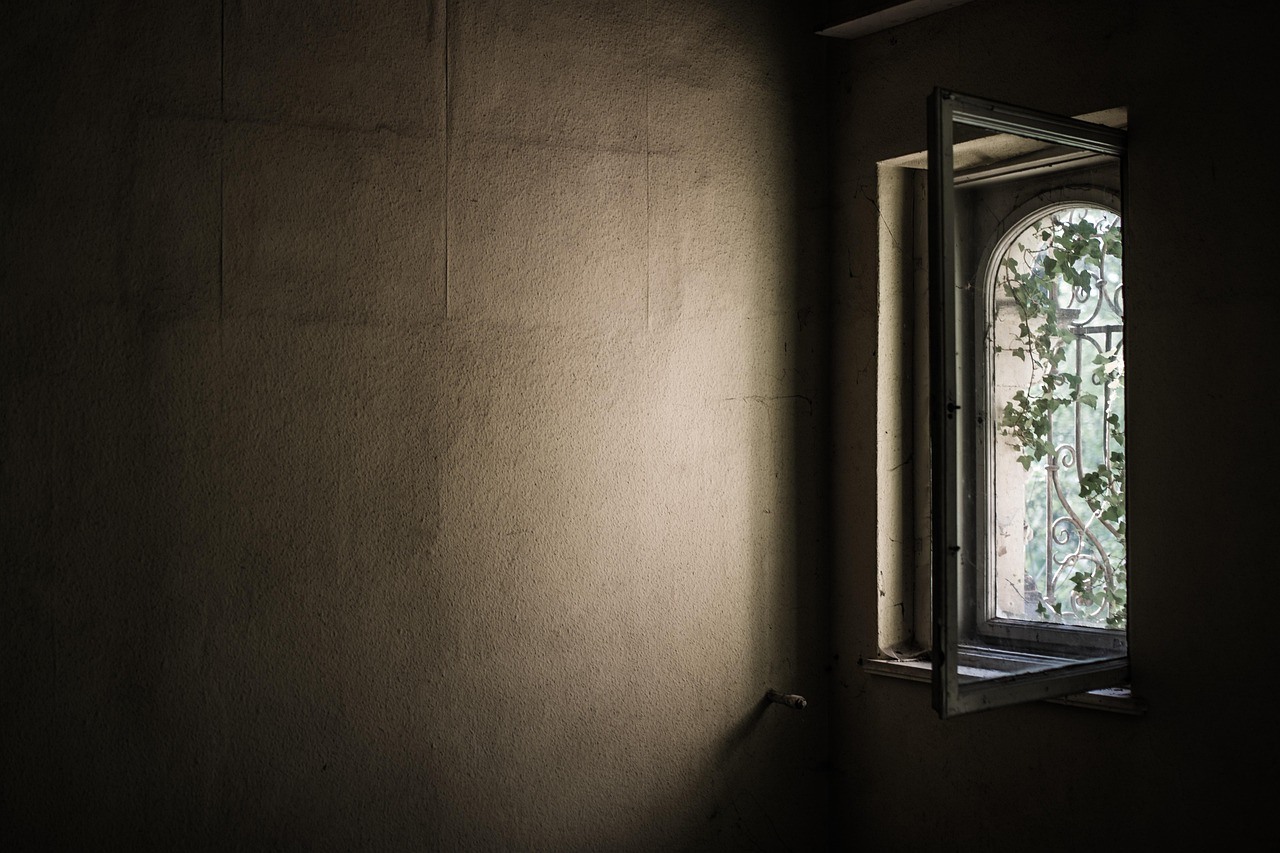
An open casement window admits a narrow patch of daylight into a sparse room with dark textured walls.
A small open casement occupies the far right of a nearly empty room. Its pale frame and angled glass catch the strongest highlights, while delicate metalwork and leaves remain visible outside. Daylight spreads from the opening in a restrained patch, grazing the adjacent wall and revealing its coarse, uneven finish. The rest of the interior stays brown and gray, with the upper corner and lower wall falling into heavy shadow. Because the window is placed off-center, the blank wall becomes an active part of the composition rather than unused space. The scene shows light arriving gradually: concentrated at the frame, softened across plaster and finally absorbed by the room’s darker surfaces.
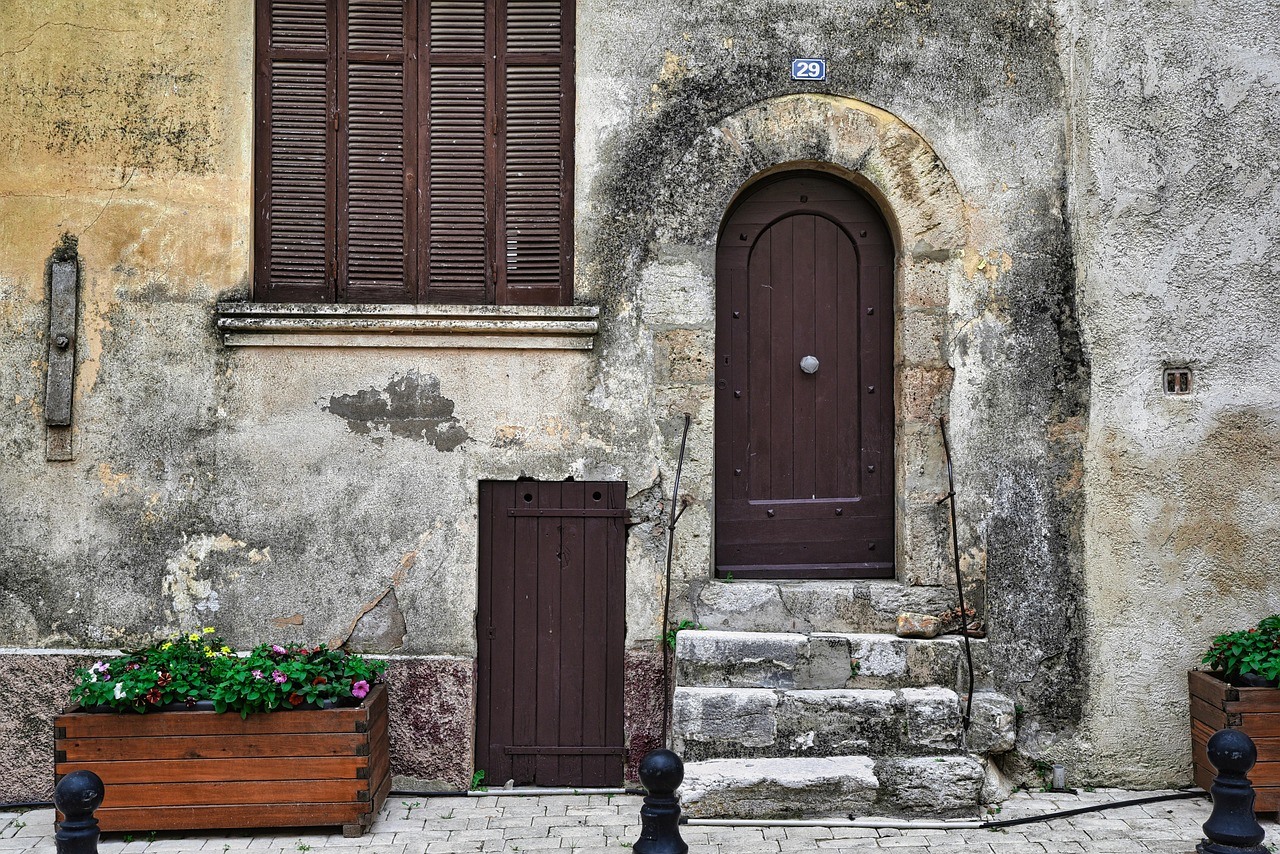
A weathered stone façade contains closed wooden shutters, an arched upper door, a smaller lower door and flower boxes.
This façade arranges several closed openings across a mottled surface: tall shutters at the upper left, an arched door reached by stone steps and a smaller rectangular door below. Their dark brown wood stands firmly against pale plaster marked by stains, chips and uneven repairs. Shadows collect beneath ledges and within the doorway recess, giving depth to a wall that might otherwise feel flat. At ground level, planted boxes add dense green leaves and small red flowers, while short black posts mark the edge of the pavement. Although no glass view is visible, the architecture records where light could enter and where it has been deliberately shut away.