Field observations
Windows turn passing light into something we can see and feel. Across quiet rooms, moving trains, weathered walls, sacred interiors and rain-covered glass, these openings frame mor
Weather on the Surface
Glass often disappears when it is clean and evenly lit, but weather makes its presence unmistakable. Rain droplets sit sharply against blurred foliage and sky, revealing the pane as a physical surface between viewer and landscape. Each drop catches light along its curved edge, and some leave faint paths as gravity draws them downward. Frost, mist and condensation would alter the boundary differently, but the visible effect here is already complex: distant forms lose detail while nearby water gains it. Attention shifts from what lies outside to the material through which it is seen. The window no longer behaves like an empty opening. It becomes a layered field where weather, reflection, focus and changing brightness meet.
Continue through the collectionAll field notesThe Window as a Measure of Time
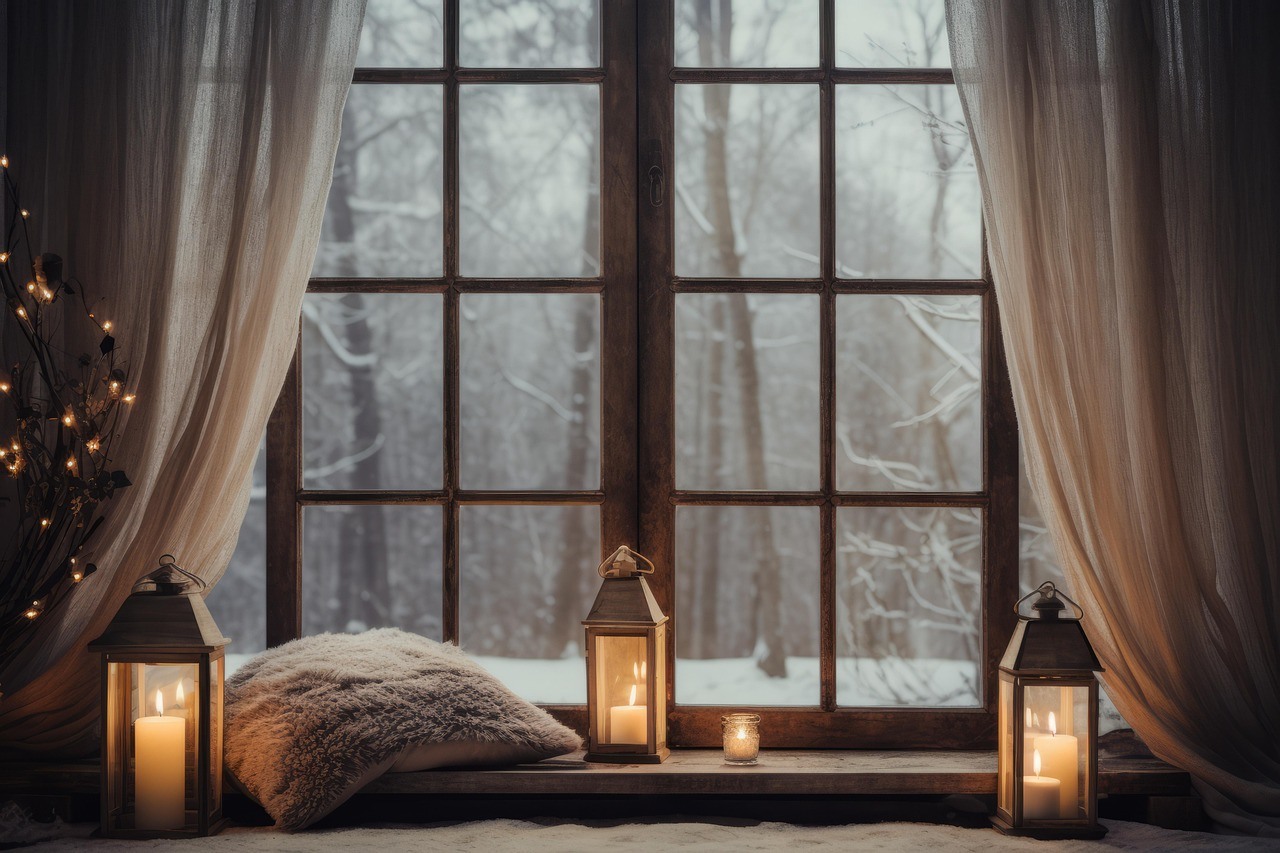
A window can register time without showing a clock. Pale morning light enters at a low angle and stretches shadows across a sill; stronger midday light reduces those shadows and clarifies surface detail. Toward evening, the exterior may remain visible after the room has darkened, turning people and furniture into silhouettes. The photographs in this collection hold several points along that progression. A train carriage surrounds its passenger with blue shadow, while a domestic sill gathers clear sunlight around a red alarm clock. Elsewhere, candlelight answers a cold landscape beyond the panes. These visible changes make time spatial. It crosses floors, touches walls, brightens one object before another and gradually alters the balance between interior and view.
Continue through the collection